Crafting Depth and Dimension with Layered 3D Snowman SVG Designs
The evolution of digital crafting has transformed how enthusiasts and professionals approach seasonal decor, moving beyond flat prints to create immersive, tactile experiences. At the forefront of this movement is the Layered 3D Snowman SVG, a design format that leverages multiple cut layers to simulate depth and shadow within a physical frame. Unlike traditional two-dimensional graphics, these files are engineered specifically for shadow box construction, allowing creators to build scenes that pop off the background. This shift from flat to dimensional art represents a significant leap in creative potential, offering a bridge between digital precision and handcrafted charm.
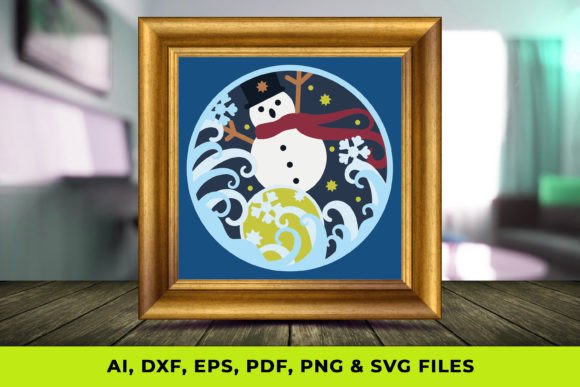
Understanding the mechanics behind these designs reveals why they have become a staple for crafters using die-cutting machines. A standard image file provides a single outline, but a layered SVG breaks the subject down into distinct planes. For a snowman design, this might involve separate layers for the base shadow, the main body, facial features, accessories like hats and scarves, and foreground elements such as falling snow or holly. When assembled with adhesive spacers between each layer, light interacts with the cutouts to create natural shadows, resulting in a striking visual effect that changes depending on the viewing angle and lighting conditions.
The Technical Architecture of Multi-Layered Files
To fully appreciate the utility of a Layered 3D Snowman SVG, one must understand the file ecosystem that supports it. These projects are rarely distributed as a single image; instead, they come as a comprehensive suite of formats including SVG, PNG, PDF, AI, EPS, and DXF. Each format serves a specific purpose in the workflow of different user groups. The SVG (Scalable Vector Graphics) is the primary engine for cutting machines like Cricut or Silhouette, ensuring that lines remain crisp regardless of scaling. Meanwhile, the DXF format offers compatibility for older software or laser cutting setups, while AI and EPS files cater to professional graphic designers using Adobe Illustrator who may need to modify vector paths before cutting.
The inclusion of PNG and PDF files adds another layer of versatility. High-resolution PNGs allow users to preview the final assembly without needing specialized software, making them ideal for mockups or sublimation projects where a 3D effect is simulated digitally. PDFs serve as excellent templates for hand-cutting or for printing guides that ensure alignment during the gluing process. This multi-format approach ensures that the design is accessible to a broad audience, ranging from hobbyists with entry-level equipment to industrial designers requiring precise vector data for large-scale production.
When working with these files, the concept of "weeding" and layer management becomes critical. A complex 3D snowman design might contain ten or more individual layers. Proper organization within the cutting software is essential to prevent errors. Experienced creators often color-code these layers digitally before sending them to the cutter, assigning specific colors to specific depths. This practice not only streamlines the cutting process but also acts as a visual map during assembly, reducing the cognitive load of figuring out which piece goes where in the physical build.
Material Selection and Structural Integrity
The success of any 3D shadow box project relies heavily on material choice. While the Layered 3D Snowman SVG provides the blueprint, the physical medium determines the durability and aesthetic quality of the final piece. Cardstock remains the most popular choice due to its rigidity and ease of cutting. However, the weight of the paper matters significantly; 65 lb to 80 lb cardstock is often the sweet spot, providing enough stiffness to hold its shape without bowing, yet thin enough to be cut cleanly by most consumer-grade machines.
For those seeking a more premium finish, specialty papers such as textured linen, metallic finishes, or even thin wood veneers can be utilized. When using heavier materials, it is crucial to adjust the cut settings on the machine to ensure through-cuts without tearing. Additionally, the adhesive used between layers plays a pivotal role. Foam tape is the industry standard for creating the necessary gap between layers to generate shadows. The thickness of this tape dictates the overall depth of the box; standard 1mm foam tape offers a subtle lift, while double-stacking tape can create dramatic, deep recesses suitable for larger displays.
Lighting considerations are also part of the material strategy. Since the goal is to enhance the 3D effect, the opacity of the materials chosen will influence how shadows are cast. Opaque cardstock creates sharp, defined shadows, whereas translucent vellum or acetate layers can diffuse light, creating a softer, ethereal glow often desired in holiday nightlights or backlit window displays. Creators must test their material combinations to ensure the structural integrity of the overhanging elements, particularly for delicate parts of the snowman design like carrot noses or twig arms.
Diverse Applications Beyond Holiday Decor
While the immediate association with a snowman design is winter holiday decor, the applications for layered SVG technology extend far beyond seasonal ornaments. Educators utilize these layered structures to teach concepts of depth, perspective, and spatial reasoning in art and geometry classes. By assembling a Layered 3D Snowman SVG, students engage in a hands-on activity that reinforces the relationship between 2D plans and 3D outcomes. This makes the technology a valuable tool in STEM and STEAM curriculums, bridging the gap between digital design and physical engineering.
In the realm of commercial retail and visual merchandising, these designs offer a cost-effective solution for creating eye-catching window displays. Small business owners can produce unique, localized decor that stands out against mass-produced plastic decorations. The ability to customize colors and scales means a boutique can match the snowman artwork precisely to their brand palette, creating a cohesive visual identity throughout the store. Furthermore, the scalability of vector files allows the same design to be shrunk for gift tags or enlarged for lobby installations without loss of quality.
Greeting card manufacturers and independent stationers also find immense value in this format. A layered snowman card offers a tactile surprise when opened, elevating the perceived value of the product. The intricate shadows add a level of sophistication that flat printing cannot achieve. Similarly, scrapbookers use these elements to create focal points on memory pages, adding dimension to winter vacation albums. The versatility of the file formats ensures that whether the end product is a standalone art piece, a functional item, or an educational tool, the core design remains adaptable.
Customization and Creative Adaptation
One of the most compelling aspects of working with digital cut files is the capacity for personalization. A base Layered 3D Snowman SVG is merely a starting point. Creators frequently modify these files to suit specific themes or narratives. For instance, a designer might alter the vector paths to add a personalized name banner across the snowman's midsection or change the shape of the hat to reflect a specific sports team logo. Because the files are provided in editable formats like AI and EPS, these modifications are straightforward for those with vector editing skills.
Color theory plays a massive role in customization. While traditional snowmen are white, the layered approach invites experimentation with monochromatic schemes, pastels, or even neon palettes for a modern twist. By varying the shades of the same color across different layers, artists can enhance the perception of depth without relying solely on shadows. A dark blue base fading to a light blue top can create an icy atmosphere, while warm tones can evoke a cozy, fireplace aesthetic. This flexibility allows the same underlying geometry to yield vastly different emotional responses from the viewer.
Moreover, the integration of mixed media opens new avenues for creativity. Crafters often combine the paper layers with other elements such as glitter, resin domes, or LED string lights. Embedding small LEDs behind the layers of a snowman design can transform a static wall hanging into a glowing nightlight, perfect for a child's room or a festive mantle. The open structure of the shadow box allows for easy access to insert these electronic components, demonstrating how digital designs can serve as frameworks for complex, mixed-media installations.
Workflow Optimization for Mass Production
For business owners and high-volume creators, efficiency is paramount. Producing layered 3D art can be time-consuming if the workflow is not optimized. Successful producers often develop a batch-processing strategy. This involves cutting all layers for multiple units simultaneously rather than completing one unit at a time. Utilizing the "matless" cutting feature on newer machines can further speed up the process for roll-fed materials. Additionally, creating jigs or alignment tools for the gluing phase ensures consistency across dozens of units, which is critical for maintaining quality control in a commercial setting.
Inventory management of materials also becomes a key consideration. Since a single Layered 3D Snowman SVG project consumes more material than a flat print due to the negative space created by cutting and the need for multiple sheets per unit, accurate calculation of yield is necessary to maintain profitability. Professionals often create digital mockups to estimate material usage before committing to a large cut run. This foresight prevents waste and ensures that the supply chain of paper, adhesive, and framing materials remains steady during peak demand seasons.
Ultimately, the rise of layered 3D designs signifies a maturation of the digital crafting industry. It moves the needle from simple replication to complex creation, empowering individuals to produce gallery-quality art from their home studios. Whether used for a singular family heirloom or a line of commercial products, the Layered 3D Snowman SVG exemplifies how technology can enhance traditional craftsmanship, providing a canvas where depth, light, and creativity converge to create something truly memorable.