Unlocking Creativity: The Ultimate Guide to 3D Robot Cracked Hole Tumbler Wraps for Sublimation
In the rapidly evolving world of custom merchandise and DIY crafting, sublimation printing has emerged as a powerhouse technique for turning blank canvases into personalized works of art. Among the most popular items to customize is the 20 oz skinny tumbler, a staple in modern daily life for coffee lovers, students, and professionals alike. At the forefront of this creative revolution are digital designs like the 3D Robot Cracked Hole Tumbler Wrap 34. This article explores what these digital assets are, why they matter, and how they fit into the broader landscape of modern creativity and small business entrepreneurship.
Understanding the Digital Asset: More Than Just an Image
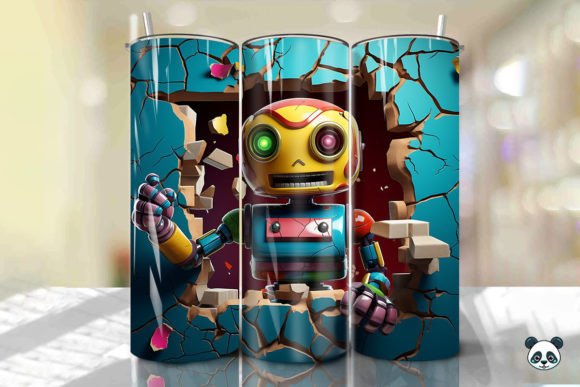
When you purchase a product described as a "3D Robot Cracked Hole Tumbler Wrap," you are acquiring a specialized digital file designed specifically for the sublimation process. Unlike a standard photograph or a simple graphic, this file is engineered with precision. It typically comes as a high-resolution PNG file, often measuring approximately 9.3 inches by 8.2 inches at 300 DPI (dots per inch).
Why are these specific dimensions and resolution critical? In the realm of print-on-demand and home crafting, quality is paramount. A 300 DPI resolution ensures that when the image is transferred onto the tumbler, the lines remain crisp, the colors vibrant, and the details sharp. The "3D Robot" aspect refers to the visual style—a dynamic, dimensional illustration of a robot that appears to pop off the surface. The "Cracked Hole" element adds a unique textural background, creating an illusion of depth and intrigue that makes the final product stand out on a crowded shelf or social media feed.
It is important to clarify a common misunderstanding for beginners: this is a digital download only. No physical tumbler, ink, or paper is included in the transaction. The value lies entirely in the intellectual property and the technical preparation of the design file, which saves the creator hours of design work.
The Significance of Seamless Patterns and Backgrounds
A key feature of advanced tumbler wraps, such as the Robot 3D seamless pattern or the associated Robot background, is their ability to cover the cylindrical surface of a tumbler without visible breaks or awkward cuts. When wrapping a design around a curved object, alignment is everything. A seamless pattern ensures that the left and right edges of the design match perfectly when wrapped, creating a continuous, professional-looking loop.
This level of technical foresight is what separates amateur attempts from professional-grade products. For the end-user, this means less time spent troubleshooting alignment issues in software like Photoshop, Canva, or Silhouette Studio, and more time focusing on the actual printing and pressing process. The inclusion of a dedicated background layer allows crafters to either use the design as-is or composite it with other elements, offering flexibility for those who wish to add names, monograms, or additional graphics.
Practical Relevance in Modern Business and Education
The rise of instant digital downloads has democratized access to high-quality design resources. This shift has profound implications for small business owners, educators, and hobbyists.
- For Entrepreneurs: Small business owners selling on platforms like Etsy, Amazon Handmade, or at local craft fairs can leverage these files to expand their product lines rapidly. Instead of hiring a graphic designer for every new theme, they can purchase a license for a Robot skinny tumbler wrap and immediately begin production. This reduces overhead costs and accelerates time-to-market.
- For Educators and STEM Programs: Robotics is a central theme in modern education. Using a Robot watercolor or 3D robot design on school merchandise can foster school spirit and promote interest in technology and engineering among students. It serves as a tangible connection between creative arts and technical subjects.
- For Hobbyists: The DIY community thrives on personalization. Whether making gifts for family members or creating unique items for personal use, having access to professional-grade 3D tumbler wrap files allows individuals to create items that look store-bought but carry a personal touch.
How It Fits Into the Workflow
Integrating a file like the 3D Robot Cracked Hole Tumbler Wrap 34 into a workflow is straightforward but requires specific knowledge. Once the ZIP file is downloaded and extracted, the user receives the PNG ready for printing. The process generally involves:
- Preparation: Importing the PNG into sublimation software. Since the sizing is pre-set to approximately 9.3 x 8.2 inches, it fits the standard 20 oz skinny tumbler template with minimal adjustment.
- Printing: Printing the design onto sublimation paper using sublimation ink and a compatible printer. The high DPI ensures the ink saturation is optimal.
- Pressing: Wrapping the printed paper around the coated tumbler and applying heat and pressure using a tumbler press. The heat turns the solid ink into a gas, bonding it permanently with the polymer coating of the tumbler.
- Finishing: Once cooled, the result is a durable, dishwasher-safe design featuring the intricate 3D robot and cracked hole aesthetic.
This streamlined process highlights why digital assets are so valuable. They remove the barrier of entry for those who may be skilled at pressing tumblers but lack advanced graphic design skills.
Clarifying Common Assumptions
Despite the clarity of product descriptions, confusion sometimes arises regarding file usage. One frequent assumption is that these files can be printed on regular paper or used for standard inkjet printing on non-coated surfaces. It is crucial to understand that sublimation requires a specific ecosystem: a sublimation printer, sublimation ink, sublimation paper, and a polyester-coated or polymer-based substrate. Without these, the Robot png file will not transfer correctly.
Furthermore, while the term "instant download" implies immediate gratification, users must possess the technical know-how to handle the files. As noted in many product descriptions, you will need to know how to use these files for sublimation printing. This is not a reflection of poor customer service but rather a necessary distinction between selling a tool and selling a service. The seller provides the high-quality blueprint; the buyer provides the construction.
The Role of Aesthetics in Consumer Choice
Why choose a robot theme? In today's tech-driven society, robotics symbolizes innovation, the future, and problem-solving. The "3D" aspect appeals to our visual desire for depth and realism, while the "watercolor" or "cracked" textures add an artistic flair that softens the mechanical nature of the subject. This blend of hard science and soft art makes the design versatile. It appeals to children who love machines, adults who work in tech, and anyone who appreciates unique, textured artwork.
The versatility of the seamless pattern also means it can be adapted beyond tumblers. With proper resizing and licensing checks, these designs can often be applied to mousepads, phone cases, or tote bags, further extending their utility and value.
Conclusion: Empowering Creativity Through Technology
The 3D Robot Cracked Hole Tumbler Wrap 34 represents more than just a file for sale; it is a bridge between digital artistry and physical creation. By providing high-resolution, pre-sized, and seamlessly patterned designs, creators empower others to bring their visions to life efficiently. Whether you are launching a small business, teaching a class on robotics, or simply looking to create a unique gift, understanding the value and application of these digital assets is key.
In an era where personalization is prized, tools like these allow everyone to become a manufacturer of their own branded goods. They illustrate the perfect marriage of technology and creativity, proving that with the right digital foundation, the only limit is one's imagination. As you explore the world of sublimation, remember that the quality of your final product often begins with the quality of the digital file you choose to start with.